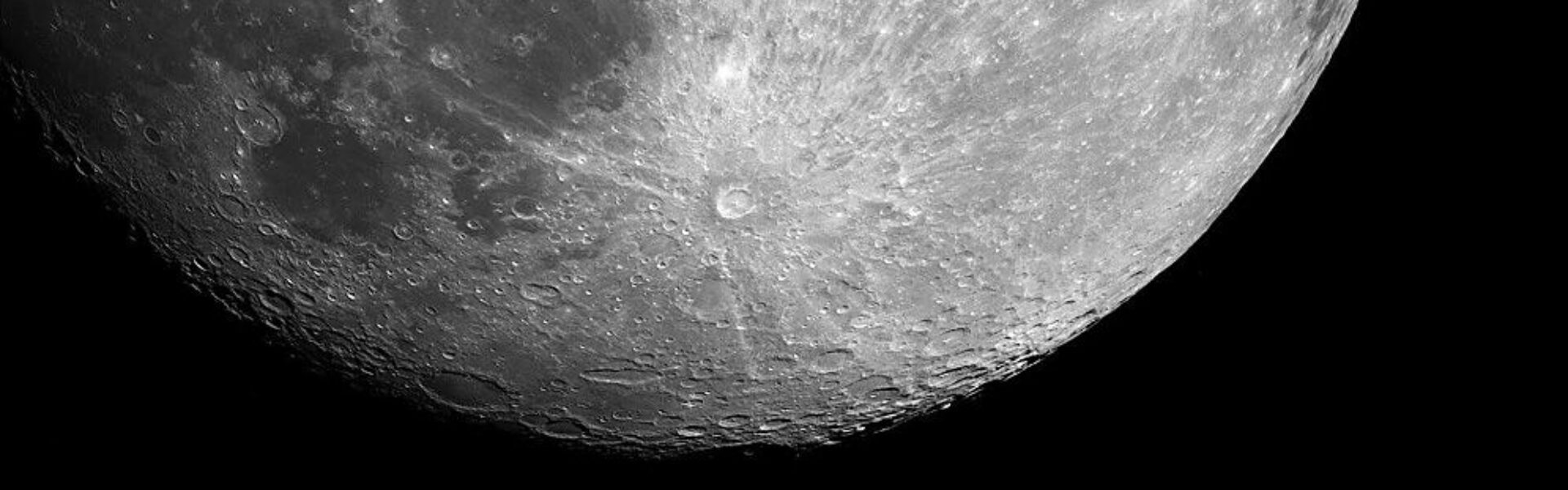
 In 1972 America’s astronauts left seismic sensors on the Moon. Gathering data for five years, they transmitted evidence of 12,000 moonquakes, reports The Atlantic.
Scientists have identified four classifications of moonquakes: deep moonquakes, thermal moonquakes, meteroid impacts, and shallow moonquakes. Deep moonquakes are the most common. Scientists counted 7,000 of them. Likely caused by the Earth’s tidal pulls, they occur about every 27 days and usually measure 2 or smaller in magnitude. Thermal quakes occur in response to the temperature changing from lunar day to night. Meteoric quakes are triggered by the impact of meteors.
The really interesting moon quakes are the “shallow” moonquakes. Seven of the 28 recorded up to 1977 exceeded magnitude 5. They last longer than earthquakes, where underground water helps dampen them. On the Moon, which is incredibly dry, seismic energy is more efficiently propagated.
Another factor differentiating shallow moonquakes from earthquakes: Unlike the Earth, the moon has no active tectonics.
The cause of shallow moonquakes remains a mystery.

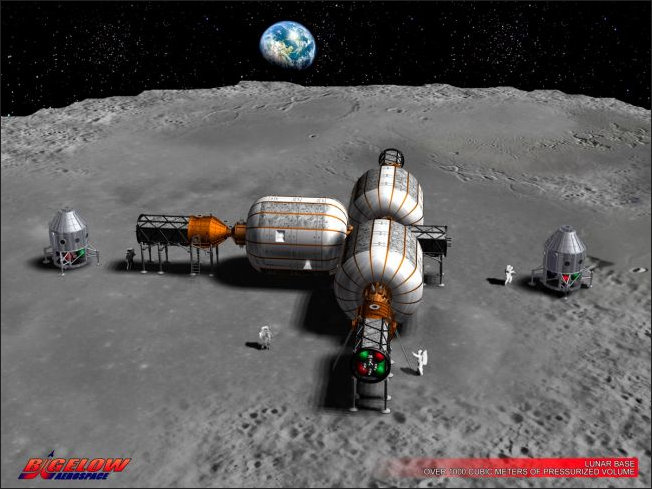


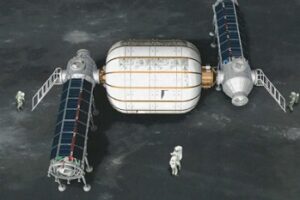 Property rights are essential in order to establish a space industry operating beyond Low Earth Orbit, says Robert Bigelow, president of Bigelow Aerospace, and he’s seeking clarification from the Federal Aviation Administration’s Office of Space Transportation (AST) on whether a Moon habitat would have a zone of operation in which other persons are prevented from entering.
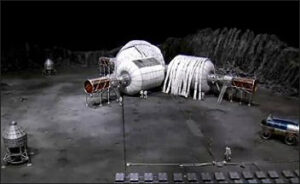 Property rights are essential to establishing a space industry in Low Earth Orbit, argues Robert Bigelow, founder and president of Bigelow Aerospace. And in an effort to advance the discussion on property rights, he is seeking clarification from the Federal Aviation Administration’s Office of Commercial Space Transportation (AST) on whether launching a Moon habitat allows a venture to have a zone of operation which others are prohibited from entering.