Skip to content

Luna 2076

The Geopolitics of Lunar Colonization

  • About
  • The Book
  • Essays
  • Online Resources
Luna 2076

Category: Uncategorized

Moon Express Teams with Rocket Lab in X Prize Competition

December 8, 2015

Moon Express, a Cape Canaveral, Fla.-based company promoting lunar colonization, has found a rocket to get its lander to the lunar surface, reports The Verge. The company views the Moon as an untapped source of minerals to mine and real estate to settle.

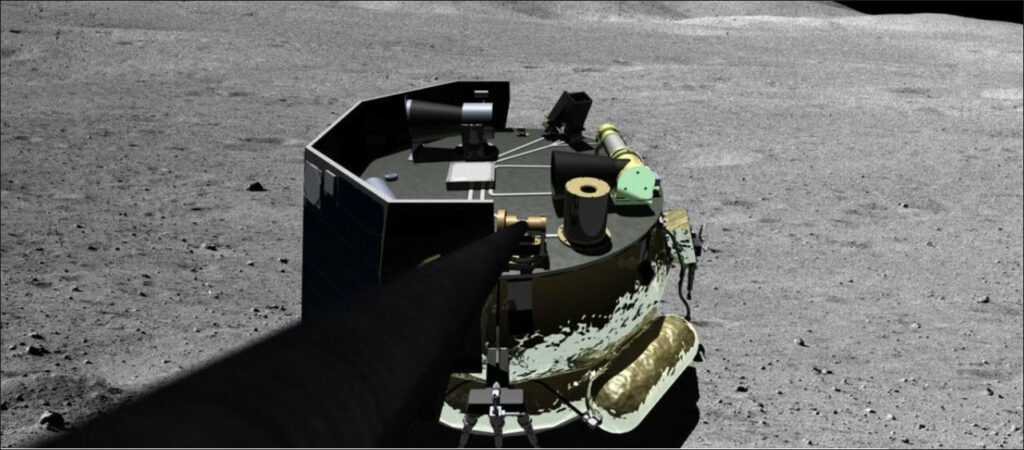
A participant in the Google Lunar X Prize, a competition that will reward the first company to land a privately funded rover on the Moon, Moon Express will launch its MX-1E micro-lander on top of the experimental Electron rocket. The Electron is manufactured by Los Angeles-based Rocket Lab.

The launch contract was accepted by the X Prize Foundation. The expected launch date was sometime in 2017.

“At X Prize, we believe that the spirit of competition brings about breakthroughs that once seemed unimaginable or impossible, and so it thrills us to now have two Google Lunar X Prize teams with verified launch contracts attempting missions to the moon in 2017,” Chanda Gonzales, senior director of the Google Lunar X Prize, said in a statement. “The new space race is truly on!”

more “Moon Express Teams with Rocket Lab in X Prize Competition”

Uncategorized

Luna 25 Probe to Restart Russian Ambitions on the Moon

September 3, 2015
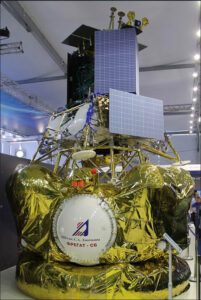
Model of the Luna 25 probe. Photo credit: Gazet.ru.

Russia is pinning its hopes for lunar colonization on Luna 25, a probe set for launch in 2025 — making it the first Russian craft to land on the Moon since 1976. Luna 25 will pave the way for an even bigger coal, a crewed landing and lunar base, reports Spaceflight Insider.

The probe, also known as the Luna-Glob lander, will land in the Boguslavsky crater near the lunar south pole and analyze the region’s regoloth. Its four television cameras will take footage of the area. Another two cameras will observe the work of the probe’s digging tool. A radioisotope thermoelectric device will provide power by converting the heat generated by the decay of plutonium-238 isotope into electricity.

“This mission is a scientific-technological one. We want to carry out scientific experiments there, but this is a technological mission in the sense that we need to return to the Moon, learn how to land, and survive the lunar night, since a lot of what was achieved in the 1970s has been forgotten,” said Vladislav Tretyako, a researcher in nuclear planetology at the Russian Space Research institute. more “Luna 25 Probe to Restart Russian Ambitions on the Moon”

Uncategorized Russia

Bigelow Touts Benefits of Inflatable Habitats

August 18, 2015


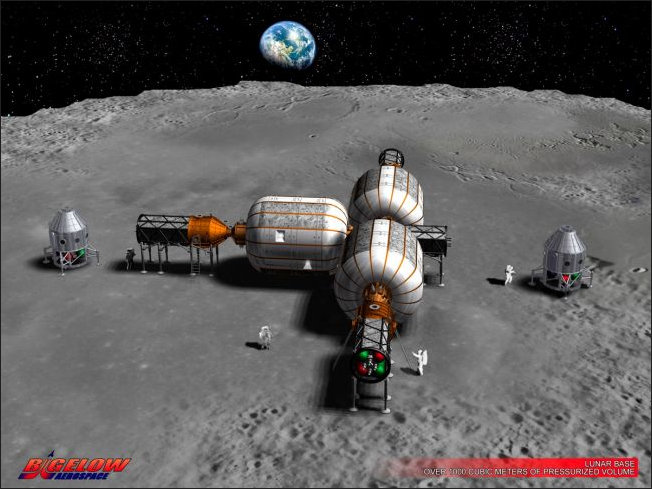
Is the Bigelow Expandable Activity Module (BEAM) the future of outer space habitation? Bigelow Aerospace hopes to demonstrate that it is with the launch of BEAM on the next launch of SpaceX’s Falcon 9 rocket, reports Space.com.

“This will give us the opportunity to demonstrate expandable-habitat technology as part of a crewed system for the very first time,” said Michael Gold, director of Washington, D.C., operations and business growth for Bigelow Aerospace. “This will be a very big step.”

The inflatable habitat is launched in a tightly packed configuration, taking up less room in a rocket than traditional metal habitats. When expanded, they offer much more living space when they reach their destinations. They also offer greater protection against space radiation and debris strikes than metal modules do, Bigelow contends.

The idea of inflatable habitats has been around for more than 50 years but the earliest model, made of rubber, would have been destroyed by any meteoroid or piece of space junk. The concept had to be shelved until materials science advanced to the point where Kevlar-like weaves were strong enough to withstand the space environment. more “Bigelow Touts Benefits of Inflatable Habitats”

Uncategorized

Explore Space from the Comfort of Your Own Home

August 18, 2015
SpaceVR satellite

SpaceVR, a San Francisco, Calif.-based virtual reality company, wants to bring solar-system exploration to Earth by using modified GroPro cameras to capture and convey immersive, 3D views from the Space Station. In time, the startup hopes to capture the entire astronaut experience, reports Space.com, from training to launch to spacewalks.Ultimately, the aspiration is to put VR cameras aboard missions to the Moon, asteroids, Mars,  and Jupiter.

“We want to take space exploration where it was meant to go — the whole planet experiencing it together,” said SpaceVR co-founder and chief technical officer Isaac De Souza. “When people take their first steps on Mars, there should be a SpaceVR camera there to watch.”

As of Aug. 17, 2015, the company’s crowdfunding effort had raised about $38,000 out of $500,000 needed to put cameras on the space station and cover the first year of operations.

Tourism/entertainment, Uncategorized

Posts pagination

Prev 1 … 5 6

Dust Mites: A Second American Revolution

The year: 2075. The American colonies on the Moon are getting restless.

Now available for sale in paperback or Kindle at Amazon.com

Recent Posts

  • How to Blockade the Moon Without Really Trying May 6, 2026
  • Second Edition May 5, 2026
  • An Exclusive Interview with the Author of “Dust Mites” June 9, 2022
  • The Most Fuel-Efficient Route to the Moon May Not Be a Straight Line May 26, 2022
  • Data Centers in Lava Tubes — an Economic Driver for the Moon? May 26, 2022

Categories

Archives

Idealist by NewMediaThemes