Skip to content

Luna 2076

The Geopolitics of Lunar Colonization

  • About
  • The Book
  • Essays
  • Online Resources
Luna 2076

Category: Economy

China Envisions $10 Trillion Earth-Moon Economic Zone

November 1, 2019
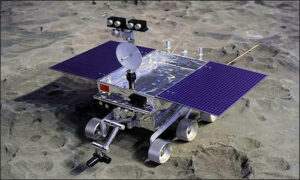
A model of China’s robotic lunar probe Chang’e-4.

While Americans fixate on the Moon as a launchpad for scientific research and exploration, the Chinese have begun thinking of the orb as an integral part of an Earth-Moon economic zone. Bao Weimin, director of the Science and Technology Commission of the China Aerospace Science and Technology Corporation, shared his thoughts on the Moon’s economic potential at a seminar on space economy Wednesday.

Bao pledged to complete basic research and make a breakthrough on key technologies before 2030, and establish a transportation system by 2040, according to Global Times. The publication quote “insiders” as saying the zone could generate $10 billion a year in economic activity.

Writes Global Times:

“In May 2018, China launched a relay satellite to set up a communications link between the Earth and the then planned Chang’e-4 lunar probe, which accomplished the first-ever soft landing on the far side of the moon in January. Chinese scientists and engineers hope the Queqiao satellite will form a communications bridge between controllers on Earth and the far side of the moon.

“Aerospace fans predicted that the plan will accelerate many important projects, including the Long March-5 carrier rocket, China’s largest launch vehicle, which is expected to be used to send the Chang’e-5 probe in 2020 to bring moon samples back to Earth, and China’s heavy-lift carrier rocket, the Long March-9, which is expected to make its first flight around 2030 and will support manned lunar exploration, deep space exploration and construction of a space-based solar power plant.”

The article made no mention of what industries would be capable of generating $10 trillion of economic activity.
Economy China

Cotton Plant Germinates on the Moon

January 19, 2019
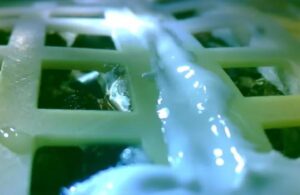
The germinating cotton plant is barely visible in this image released by Chongqing University.

China may not have been the first nation to land a human on the Moon, but it was the first to land a plant on Earth’s satellite and prompt it to germinate. The Chang’e 4 lunar lander held a small tank containing plant seeds. And now, a Chinese scientific team has announced, a cotton seed has sprouted.

Scientists aboard the International Space Station regularly tend plants to study had microgravity effects growth. But the closest terrestrial vegetation has come to the Moon was in 1981 when Apollo 14 astronaut Stuart Rosa carried hundreds of tree seeds to orbit the Moon with him. Many were planted back on Earth, becoming “Moon Trees,” reports Space.com.

The Chinese lander also contains seeds to grow potatoes and Arabidopsis, a common lab plant, but neither have sprouted so far. The Chang’e 4 lander, perched inside Von Karman Crater on the far side of the Moon, is accompanied by the Yutu 2 rover. Both robots are experiencing their first long, cold night on the Oon. Daytime and nighttime each last about two Earth weeks.


Economy

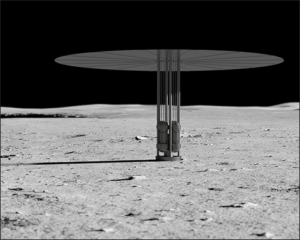
Tiny Nuclear Reactors Could Provide Energy on the Moon

May 18, 2018
Artist’s rendering of a nuclear power system on the Moon. Photo credit: NASA

NSA has successfully tested a design for a small nuclear-fission reactor, the Kilopower, that could provide a reliable source of power on the Moon.

Current space missions, reports Scientific American, use fuel cells, nuclear batteries or solar power, but each source has drawbacks. A a night on the Moon lasts two weeks, and the strength of sunlight on Mars is only 40% that of earth. “When we go to the moon and eventually on to Mars, we are likely going to need large power sources not dependent on the sun, especially if we want to live off the land,” says Jim Reuter, NASA’s acting associate administrator for space technology.

Kilopower is a small, lightweight fission reactor that can provide up to 10 kilowatts of electricity, enough to power three to eight typical American houses — and enough to power a human outpost on the Moon or Mars. more “Tiny Nuclear Reactors Could Provide Energy on the Moon”

Economy Energy

Commercial Colony on Moon Could Cost $5-$10 Billion

March 10, 2016

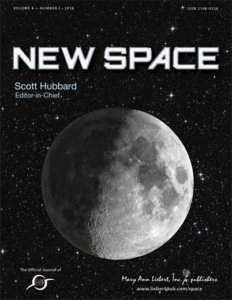
Drawing upon insights from a group of thought leaders and venture capitalists, a  paper published by “New Space” argue that a permanently inhabited lunar outpost could be established by the early 2020s at a cost $10 billion or less.

The paper, “Site Selection for Lunar Industrialization, Economic Development, and Settlement,” provides a preliminary treatment of the factors that would guide the optimum location for a commercially driven lunar settlement, which, in its initial phase, would house at least 10 people on extended tours.

Key parameters include: (1) power availability, (2) low-cost communications over wide areas,” (3) availability of water (or hydrogen-based molecules) and other resources, and (4) surface mobility.

The paper resides behind a paywall, but Popular Science provides a summary.

Power. The sun will be the primary source of power. The problem is that most lunar locations have 15-day nights, which creates a significant energy-storage problem. By the poles have nights lasting only four days or so. Therefore, the first lunar station will likely be located at one of the poles.

Communications. Communications will be easiest from the side of the Moon facing the Earth.But a relay station on the Moon or in orbit  could remedy the problem.

Terrain. Although the lunar north and south poles receive similar amounts of light, the paper deemed the north pole a preferable location for a settlement because it has smoother terrain that’s easier to travel across. In particular, the paper singles out the rim of Peary crater as being the best spot to develop a low-cost solar station. The crater likely contains water and has a smooth floor, making it easier for robots to traverse as they extract resources.

Commercial potential. Export options include water as a rocket fuel, precious metals from asteroid impact sites, Helium-3 as a nuclear fusion fuel, and even tourism. A study made last year, adds Popular Science, found that a Moon base could pay for itself by generating $40 billion rocket propellant per year.

Colonies, Economy

Posts pagination

Prev 1 2

Dust Mites: A Second American Revolution

The year: 2075. The American colonies on the Moon are getting restless.

Now available for sale in paperback or Kindle at Amazon.com

Recent Posts

  • The Powered Armor Fantasy August 27, 2026
  • The New Sputnik: China’s Colonization of the Moon August 24, 2026
  • Coming Soon: Lights on the Moon August 18, 2026
  • Telling Time on the Moon August 17, 2026
  • Money, Power and the Struggle for Liberty… on the Moon August 8, 2026

Categories

Archives

Idealist by NewMediaThemes