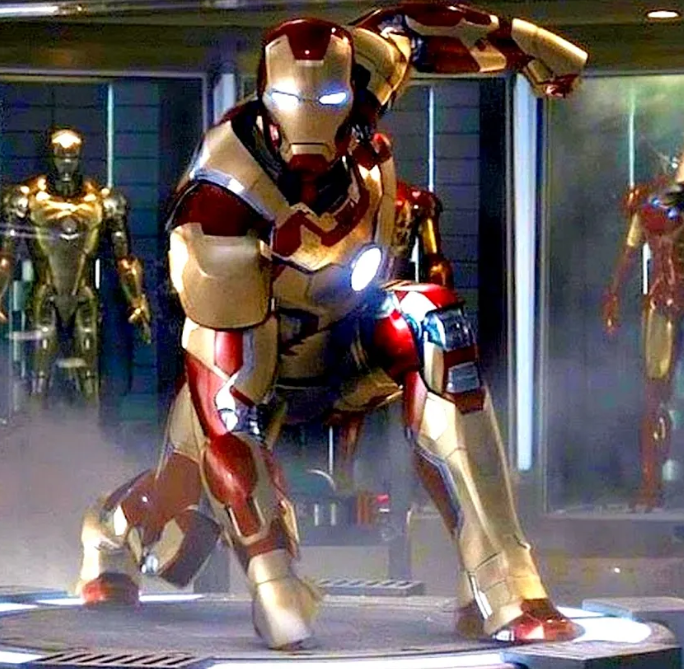
Hollywood movies such as Iron Man, sci-fi novels such as Robert Heinlein’s “Starship Troopers,” and computer games such as Starcraft have popularized the image of space-era warriors wearing heavily armored battle suits. Dreaming of something similar, Pentagon planners have poured countless dollars into power-armor R&D. As Jared Keller points out in his website Laser Wars, none of it has worked out.
Designing power suits, it turns out, is incredibly difficult, Keller concludes in tracing the history of failed efforts since the 1960s. Speaking of the Tactical Assault Light Operators Suit (TALOS) launched in 2013, he writes:
TALOS failed not by lack of ambition, but by what its overseers diagnosed as the fatal flaw of every powered exoskeleton before it: “complex subsystem interdependencies.” Too many disparate and complex systems simply couldn’t operate seamlessly together in a way that felt, as Heinlein promised, like simply wearing clothes.
“Decade after decade, the Pentagon stands up a new program, pours in money and engineering talent, and watches each effort collapse under the same recurring challenges,” he says. “And yet, on battlefields and in logistics depots around the world, the dream of military exoskeletons lives on.”

It turns out that a lot of soldiers suffer musculoskeletal injuries doing things like hauling artillery shells and evacuating the wounded in litters. In 2022, the Army began field testing of the Soldier Assistive Bionic Exosuit for Resupply (SABER). China and the Ukraine are moving in similar directions.
Keller holds out hope for limited applications of exoskeletons.
The current exoskeleton applications that appear successful share four traits: they target a specific part of the body, like the back or knees; they are passive or minimally powered; they solve a specific and unglamorous logistics problem; and they are light and simple enough that a soldier will actually wear them.
Perhaps wisely, Keller does not project fifty years into the future. In writing “Dust Mites,” I gave little attention to power suits: Armed conflict is fought underground between lightly armed U.S. Marshals and the civilian police of the lunar colony Galileo Station.
In my soon-to-be-published “Trogs,” lunar infantry, or “mech troopers,” play a key role. By necessity, I did give some thought to what surface battle suits might look like. Advances in robotic engineering will make a lot of things possible in fifty years that aren’t today. However, the 1/6 gravity of the Moon, the necessity of equipping soldiers in the lunar vacuum with what amounts to space suits, and the physics of movement — 1,000-pound armored exoskeletons may weigh less than on Earth but its mass still has 1,000 pounds of inertia and momentum — will create vastly different design parameters.
Wisely, I think, I did not dwell on the details. I just assumed that someone will figure it out.
Read more about the geopolitics of lunar settlement at www.luna-2076.com