“Today’s modern battlefield operates from the seabed to cislunar space, Gen. Dan Caine, chairman of the Joint Chiefs of Staff, told the Air, Space & Cyber Conference in Maryland last month.
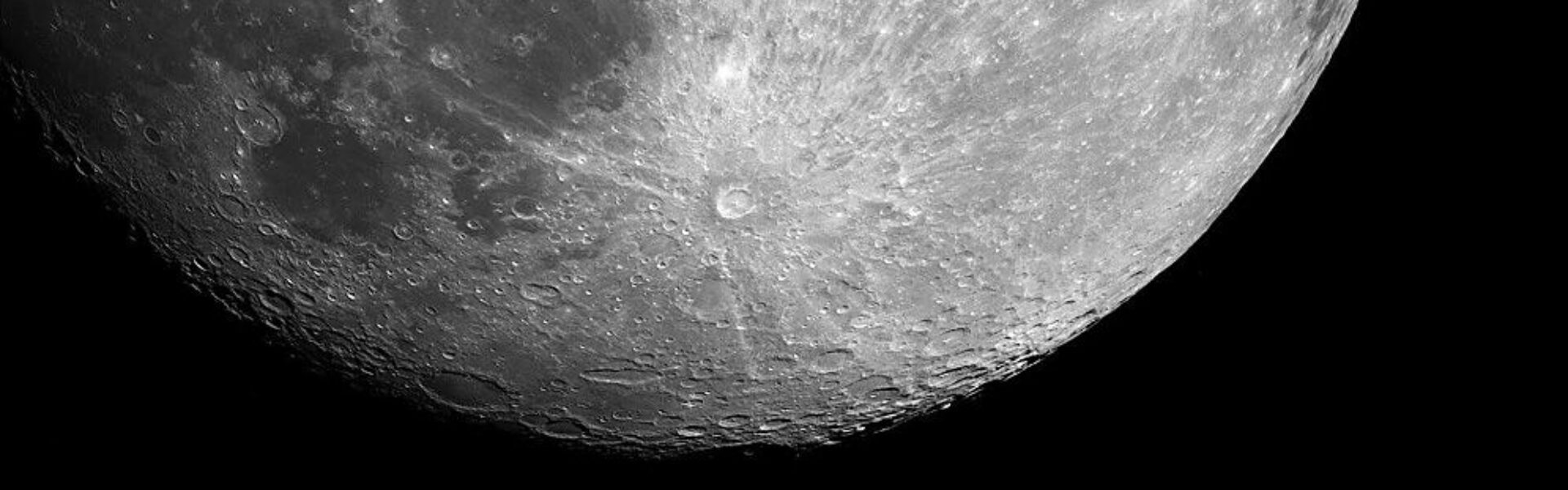
As Mike Wall reminds us in Space.com, where he reports the story, cislunar space extends from Earth to the orbit of the Moon and includes the lunar surface.
It seems all but inevitable that the U.S. Space Force will embrace the Dust Mites/Trogs mantra that he who controls the Moon controls cislunar space, and he who controls cisnlunar space controls the Earth.
Caine provided no details about what the cislunar battlefield might look like. (Wall thinks it will be entirely robotic, focused on taking out the enemy’s satellites). But the general did say this:
Future conflicts will demand that we operate without the assumptions of uncontested access, secure rare areas, or uninterrupted or uncontested sustainment. Our task, my friends. is to adapt right now, so the joint force is prepared to fight, endure and win in global contested environments, from the seabed to cislunar space.
We must continue to ensure that the United States of America can strike anywhere on the globe at the time and place of our choosing, and sustain that force. Our United States Space Force must provide unrivaled space superiority and sustain the associated networks, domain awareness [and] data advantage that the joint force needs to win in space, both now and in the future.
Wall quotes Gen. Douglas Schiess, who also spoke at the conference: “Let me be crystal clear: Today, guardians operate on-orbit weapons that can defend the joint force against space-enabled attacks.” (Guardians are the official name of members of the Space Force.)
Schiess, according to Wall, implied that these on-orbit weapons are electromagnetic rather than kinetic in nature — designed to knock out key systems of adversaries’ satellites rather than destroy the entire spacecraft.
My spin: When will the Moon itself become a battleground?
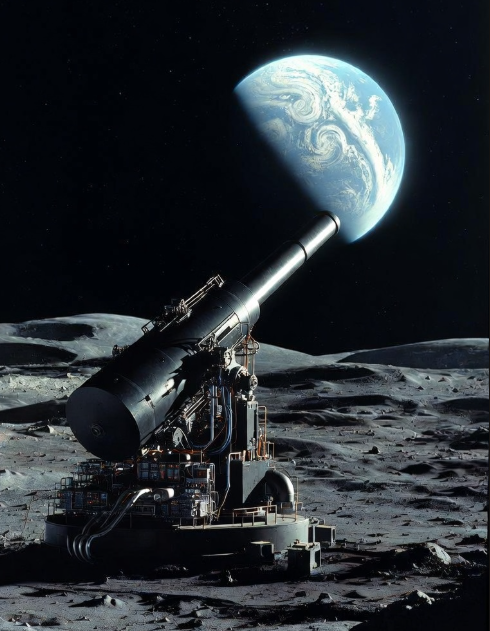
The great powers have yet to establish a presence on the lunar surface, robotic, human or otherwise, so the Moon is unlikely to play a role in any near-term conflict. It is only a matter of time, however, before there are colonies on the Moon. Some will have scientific and commercial missions, but a primary driver of colonization will be military. The Moon will provide protected, dug-in platforms for lasers and electro-magnetic cannons capable of contesting cis-lunar space. The logic for such facilities will intensify when lunar outposts begin mining He-3 in the regolith to fuel fusion power on Earth, and as Moon bases become jumping-off points for maintaining orbiting solar arrays, data-centers and manufacturing facilities.
If Space Command logic extends the battlefield to “cislunar space” today, it inevitably will expand in time to the lunar surface.