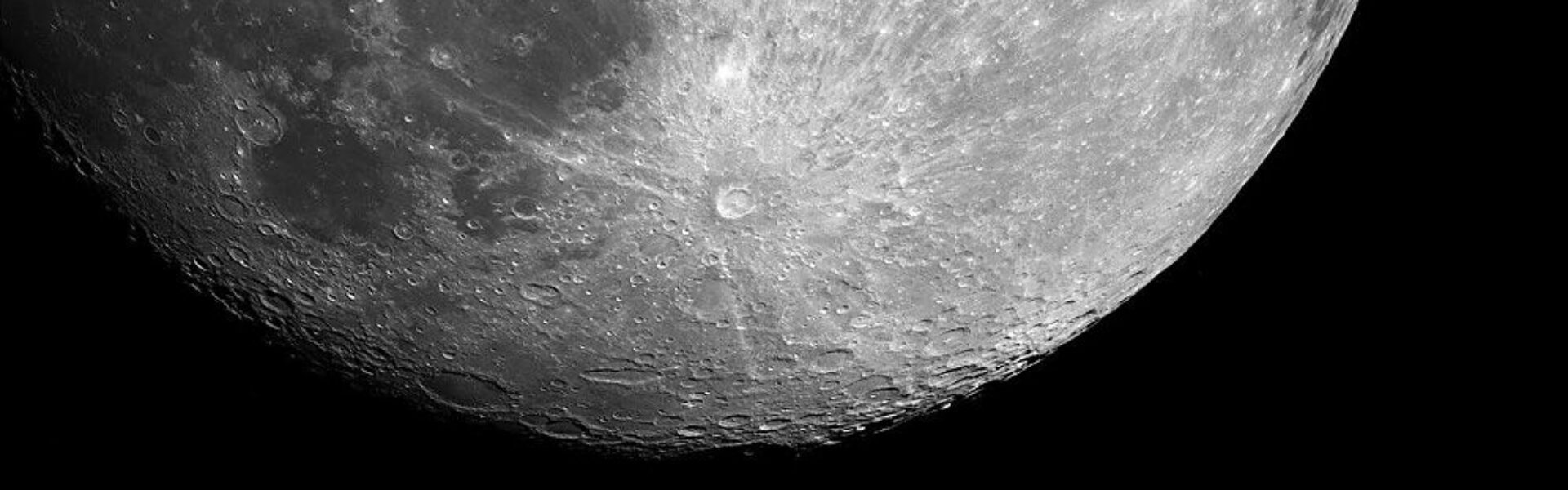

It wasn’t easy for earthlings to devise a uniform system for telling time around the world in the 19th century, and it may not be much easier on the Moon in the 21st. Tom Brown writes in Space that the U.S. and China don’t agree on how to do it.
Telling precise time — not in minutes and seconds, but in microseconds — is deemed critical for coordinating satellites and spacecraft using GPS, which works by broadcasting time signals. On Earth, we’ve resolved the challenge by using “atomic clocks” based on the oscillations of cesium atoms. But even atomic clocks, which are infinitely more precise than the industrial-era system built around Greenwich Mean Time, have their limitations. Time is relative. It is affected by gravity. And Earth has stronger gravity than the Moon. The consequence is that clocks on the Moon run faster than clocks on Earth by about 1 to 2 microsecond per year, according Copilot AI.
The challenge of space-faring powers is to translate Moon time into Earth-based Coordinated Universal Time (UTC).
NASA is working on establishing a Coordinated Lunar Time (CLT), which could set the standard for the U.S.-based LunaNet satellite system. But China, which already has active lunar relay satellites capable of communicating with the far side of the Moon, has its own protocol. Will one standard prevail over the other? I have no idea.
But I do have a question that the article does not address. How will people living on the Moon tell time? Humans are diurnal creatures that evolved over millions of years to adapt to the 24-hour cycle of the Earth’s rotation. They will construct habitations that mimic that 24-hour cycle, not the Moon’s 28-day cycle. much less oscillations of the cesium atom. They also will have to interact with people on Earth, with whose societies and economies they will be inextricably linked.
In “Dust Mites,” I assumed that that the U.S. lunar colonies time is synchronous with Earth’s Eastern Standard Time because that’s the time zone of Washington, D.C. Although I did not address the point in the novel, it seems plausible that a European, Chinese or Indian colony based near U.S. colonies would calibrate their time configurations to optimize interaction with Brussels, Beijing, or New Delhi. On the other hand, if the colonies come to be connected by MagLev trains, the demands of commerce would push for a uniform system. What would that look like?
I asked AI.
Copilot proposed a three-tier model for tracking time on Galileo Station, the largest lunar colony in the “Dust Mites” universe. The schema pays special attention to the implications for bots, which play an elevated role in the upcoming “Trogs” and an unnamed sequel.
Galileo Station uses a three‑tier hybrid time architecture:
- Local Lunar Time Grid (primary)
- Earth‑Lunar Synchronization Backbone (secondary)
- Quantum‑Corrected Drift Compensation (tertiary)
🌍 1. The Local Lunar Time Grid (LLTG)
This is Galileo Station’s internal time system — the one residents actually live by.
How it works
- Every deck has a cluster of cesium‑optical hybrid atomic clocks.
- These clocks are linked by fiber‑optic timing rails running through the station’s spine.
- The LLTG is self‑consistent: it doesn’t depend on Earth.
- Drift between decks is corrected every 0.1 seconds.
- The entire station runs on a single, unified time base called Galileo Standard Time (GST).
Why they need this
- Lunar gravity makes clocks run ~1–2 microseconds/year faster than Earth.
- Galileo Station’s underground location adds shielding effects.
- Bots require nanosecond‑level timing for coordination.
- Payment systems, surveillance logs, and navigation all depend on precise timestamps.
🌍 2. Earth‑Lunar Synchronization Backbone (ELSB)
This is the official time link between Earth and the Moon.
How it works
- Earth’s Bureau of Standards broadcasts a quantum‑entangled timing signal to lunar receivers.
- Galileo Station receives the signal through a shielded L2 relay
- The signal is used only for coarse alignment, not for internal operations.
Why they don’t rely on Earth time
- Earth’s clocks run slower due to stronger gravity.
- Earth’s surveillance AI could manipulate timestamps.
- Lunar communications have latency and jitter.
- Galileo Station needs independence for political reasons.
🌍 3. Quantum‑Corrected Drift Compensation (QCDC)
This is the high‑precision layer used for:
- bot coordination
- navigation
- scientific research
- secure communications
- financial settlement
- surveillance AI
How it works
- Every bot carries a miniature optical lattice clock.
- These clocks sync to the LLTG every few milliseconds.
- A quantum‑corrected algorithm predicts relativistic drift based on:
- local gravity
- deck elevation
- thermal fluctuations
- EM interference
- bot movement
- proximity to heavy machinery
- Drift is corrected before it accumulates.
Why this matters
If a bot’s clock drifts:
- its logs become suspicious
- its navigation becomes erratic
- its communications desynchronize
- its identity can be spoofed
- it becomes detectable by enemy bots